03 Business Continuity Planning
Business Continuity
Business Continuity is the ability of an organization to continue operating during and after a disaster or other disruptive event. It is a critical part for the IT organisation and is essential for ensuring the survival of an organization.
Business Continuity Planning
Business Continuity Planning (BCP) is the process of creating a plan to ensure that an organization can continue operating during and after a disaster or other disruptive event. The goal of BCP is to minimize the impact of a disaster on the organization and to ensure that the organization can continue to operate.
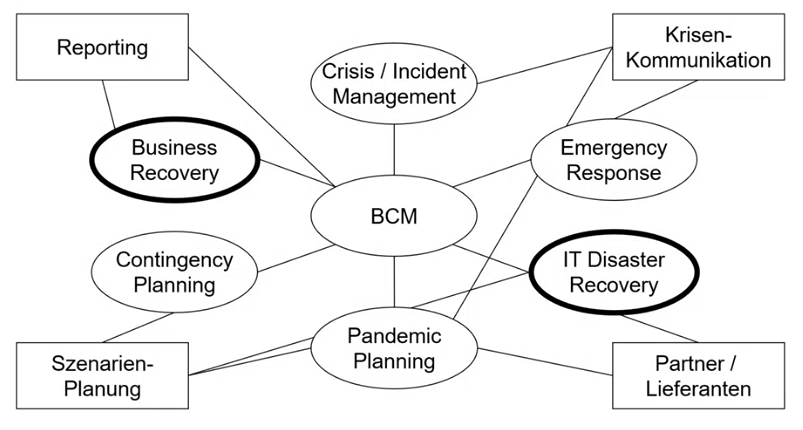
Business Continuity Management
Business Continuity Management (BCM) is the process of managing and implementing the BCP. BCM includes identifying risks, developing a BCP, testing the BCP, and maintaining the BCP. BCM is an ongoing process that requires regular review and updates to ensure that the BCP is effective.
The question is not whether a crisis will occur, but when it will occur and how well prepared you are.
Crisis Management
Crisis situations must be managed effectively to minimize the impact. The following fields have to be covered:
- Leadership: Crisis management team with clear roles and responsibilities.
- Planning: Management plan with scenarios and regular training.
- Workforce: Have enough staff to overcome the crisis (e.g. pandemic).
- Infrastructure: Ensure that the infrastructure is resilient and can withstand the crisis.
- Business Activity: Identify critical business activities and ensure they can continue during the crisis.
- Communication: Ensure that communication is clear and timely during the crisis.
- Law and Compliance: Ensure that the organization is compliant with all relevant laws and regulations during the crisis.
IT Disaster Recovery
IT Disaster Recovery is the process of recovering IT systems and data after a disaster or other disruptive event. IT Disaster Recovery is a critical part of BCP and is essential for ensuring that the organization can continue to operate. Services must be identified and prioritized to ensure that the most critical services are recovered first.
Compliance
Compliance is the act of conforming to a set of rules, regulations, or laws. It is important to ensure that the organization is compliant with all relevant laws and regulations. Compliance is required by law and non-compliance can result in fines, penalties, or other legal consequences.
Governance
Governance is the process of managing and controlling the organization. In IT organisations this includes leadership, organizational structures, policies, and procedures to support the organization’s goals. Governance is voluntary and is not required by law, but it is important for ensuring the success of the organization.